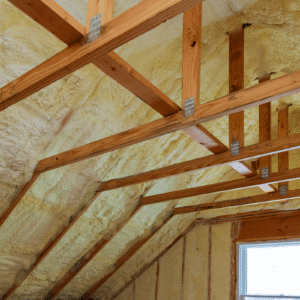
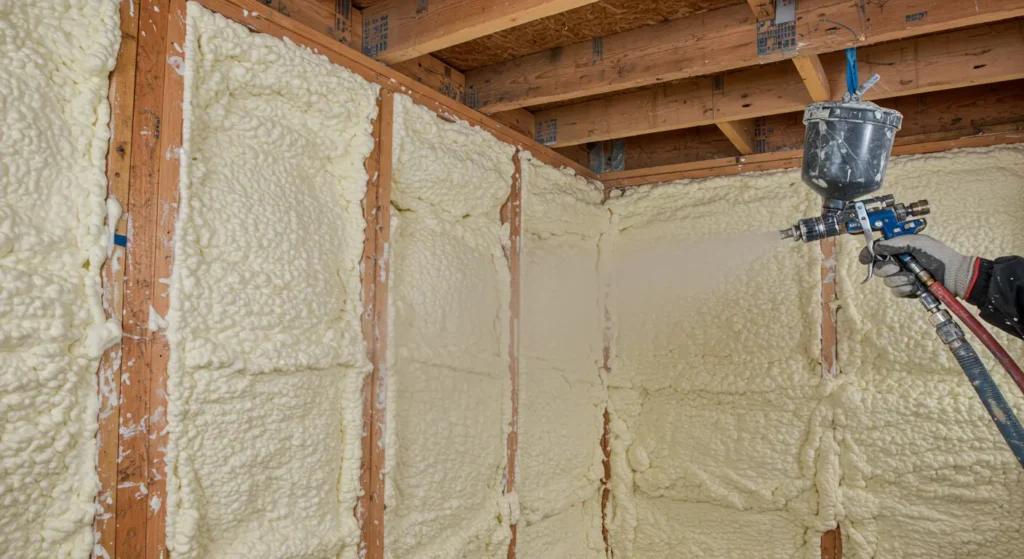
Spray foam insulation can cost anywhere from a relatively modest amount for a small targeted area to several thousand dollars for a full attic, roofline, basement, or whole-home project.
In 2026, the average spray foam insulation cost in NYC commonly falls within a broad range of about $1,800 to $7,150 per project, depending on the size of the space, foam type, required thickness, access, preparation, and labor. Current New York City insulation pricing also places spray foam at up to roughly $7 per square foot for some installations.
The biggest mistake is comparing spray foam quotes only by square footage. Two homes with the same attic area can have very different costs if one requires three inches of open-cell foam and the other requires several inches of closed-cell foam, old-insulation removal, difficult access, and extensive preparation.
Spray Foam Insulation Cost in NYC at a Glance
These 2026 figures provide a useful starting point:
| Cost Factor | Typical 2026 Range |
| NYC spray foam project | About $1,800–$7,150 |
| Open-cell spray foam | About $0.60–$1.60 per board foot installed |
| Closed-cell spray foam | About $1.30–$3.10 per board foot installed |
| General NYC insulation installation | About $1.50–$7 per sq. ft. |
| Typical national spray foam project | About $1,455–$4,337 |
Current pricing data places professional open-cell installation around $0.60 to $1.60 per board foot and closed-cell foam around $1.30 to $3.10 per board foot.
Those figures are planning ranges rather than guaranteed NYC quotes.
Open-Cell vs Closed-Cell Spray Foam Cost
Foam type is one of the largest factors affecting the final price.
Open-Cell Spray Foam
Open-cell foam has a lighter cellular structure and expands considerably after application.
Current 2026 estimates put installed open-cell foam at approximately:
$0.60 to $1.60 per board foot
It generally provides around R-3.5 to R-3.7 per inch, depending on the specific product.
Open-cell foam can be useful in applications such as:
- Interior wall cavities
- Certain attic assemblies
- Ceilings
- Sound-control applications
Because it uses less material by density, it normally costs less than closed-cell foam.
Closed-Cell Spray Foam
Closed-cell foam is denser and more rigid.
Current 2026 estimates place installed closed-cell spray foam around:
$1.30 to $3.10 per board foot
It commonly provides approximately R-5 to R-7 per inch, allowing greater thermal resistance within a thinner assembly.
Closed-cell foam is frequently considered for:
- Basements
- Crawl spaces
- Exterior wall assemblies
- Attics
- Areas where available cavity depth is limited
The denser material and greater amount of product used per inch explain much of the price difference.
What Is a Board Foot?
Spray foam is often priced by the board foot rather than simply by floor square footage.
One board foot represents:
1 square foot × 1 inch thick
That thickness component is important.
Example
Suppose you have a 1,000-square-foot surface.
At one inch thick:
1,000 board feet
At three inches thick:
3,000 board feet
At five inches thick:
5,000 board feet
So when comparing prices, “How many square feet?” is only half the question.
You also need to know how thick the foam will be installed.
Required R-Value Can Change the Project Cost
R-value measures a material’s resistance to heat flow.
Higher R-values provide greater resistance.
ENERGY STAR notes that recommended insulation levels vary by climate zone and where the insulation is being installed. For existing homes in Climate Zones 4A and 4B, attic recommendations can reach R-49 to R-60 depending on existing insulation conditions.
New York City is in a heating-and-cooling climate where insulation depth matters.
Why This Affects Price
Suppose one spray foam product provides approximately R-3.7 per inch and another provides approximately R-6.5.
Reaching the same target R-value requires different thicknesses.
More required thickness generally means:
- More material
- More spraying time
- Higher cost
The insulation assembly therefore needs to be designed first before a useful price can be calculated.
Attic Spray Foam Costs Depend on Where the Foam Goes
“Spray foam my attic” can describe two very different projects.
Attic Floor Installation
Foam may be installed at the attic floor to separate conditioned rooms below from an unconditioned attic.
Roof Deck Installation
Foam may instead be applied along the underside of the roof deck, creating a different thermal boundary.
The roof deck usually has substantially more surface area than the attic floor because of:
- Roof slope
- Rafters
- Dormers
- Valleys
- Architectural complexity
That can make the project more expensive even when the house footprint is identical.
NYC Building Layout Can Affect Labor
New York buildings are not all straightforward open attics.
Properties may include:
- Brownstones
- Townhouses
- Multifamily buildings
- Prewar construction
- Low-clearance crawl areas
- Irregular roof framing
- Mechanical equipment in tight spaces
Limited access slows installation.
A large open attic where technicians can move freely is generally easier to insulate than a narrow roof cavity filled with ducts, wiring, pipes, and framing obstacles.
Difficult Access Can Increase Cost
Additional labor may be required when:
- Equipment must travel several floors.
- Access openings are small.
- Work areas have low clearance.
- Furniture or stored items must be protected.
- Multiple separate areas require spraying.
This is why NYC labor and access can make local projects more expensive than broad national averages suggest.
Old Insulation Removal Can Add to the Price
Spray foam is not always installed directly over whatever insulation is already present.
Old material may need removal if it is:
- Wet
- Contaminated
- Mold-affected
- Heavily damaged
- Blocking the intended air-sealing surface
Removal adds:
- Labor
- Bagging
- Disposal
- Site cleanup
Current 2026 spray foam pricing data notes that mold remediation alone can add roughly $1,125 to $3,345 when contamination is discovered before installation.
That does not mean every old attic needs remediation.
The existing condition needs to be inspected first.
Surface Preparation Matters
Spray foam needs suitable surfaces.
Preparation can include:
- Cleaning
- Removing loose material
- Protecting windows and finishes
- Masking mechanical equipment
- Closing large gaps
- Correcting moisture problems
Proper prep is part of installation, not an optional cosmetic step.
Poor preparation can affect adhesion and create unnecessary cleanup afterward.
Moisture Problems Should Be Fixed Before Insulating
Spray foam should not be used to hide an active leak.
Before installation, identify and correct issues such as:
- Roof leaks
- Plumbing leaks
- Persistent condensation
- Water intrusion
Insulating over an unresolved moisture source can make later inspection and repair more difficult.
Closed-cell foam has greater resistance to moisture than open-cell foam, but that does not turn it into a substitute for repairing a leaking roof or pipe.
How Air Sealing Affects the Value of Spray Foam
Spray foam can perform both thermal-insulation and air-sealing functions when applied correctly.
This is one reason it is often considered for complex framing cavities and hard-to-seal areas.
ENERGY STAR recommends combining insulation improvements with air sealing because stopping unwanted air movement can improve the effectiveness of the thermal envelope.
Common Air-Leak Areas Include
- Plumbing penetrations
- Electrical penetrations
- Roof-to-wall transitions
- Rim joists
- Attic framing connections
- Utility chases
A price comparison should therefore consider what work the system is replacing or combining.
Does Closed-Cell Foam Cost More but Require Less Thickness?
Generally, yes.
Because closed-cell foam usually has a higher R-value per inch, less physical thickness may be required to reach a particular thermal target.
For example:
Open-Cell Example
R-3.7 per inch × 6 inches = approximately R-22
Closed-Cell Example
R-6.5 per inch × 3.5 inches = approximately R-23
The actual R-value must come from the specific product documentation.
This example simply shows why price per board foot alone does not determine which assembly will cost less overall.
Small Spray Foam Jobs Can Cost More Per Square Foot
Contractors have setup costs regardless of project size.
These can include:
- Mobilization
- Protective equipment
- Spray equipment preparation
- Masking
- Cleanup
For that reason, spraying 100 square feet may not cost exactly one-tenth of a 1,000-square-foot project.
Larger areas may have a lower effective cost per square foot because setup expenses are spread across more material.
Also Read: Open Cell vs Closed Cell Spray Foam: Which Is Right for Your New York Home?
New Construction vs Retrofit Costs
Spray foam is generally easier to install when framing is open.
New Construction
Technicians may have direct access to:
- Wall cavities
- Roof decks
- Rim joists
- Floor assemblies
This reduces demolition and access work.
Existing Buildings
Retrofits can require:
- Removing finishes
- Accessing narrow cavities
- Working around mechanical systems
- Removing old insulation
That can increase the final spray foam insulation cost in NYC even when the insulated area is relatively small.
What About Fire Protection Requirements?
Spray polyurethane foam is subject to building-code requirements concerning flame and smoke performance.
ENERGY STAR insulation criteria reference applicable International Building Code and International Residential Code requirements for surface-burning characteristics.
Depending on where foam is installed, additional thermal or ignition-barrier protection may be required.
Possible additional work can include:
- Drywall
- Approved coatings
- Other code-compliant protective systems
The project scope should account for these requirements before pricing is finalized.
Example Spray Foam Cost Calculations
These simplified examples show why thickness matters.
Example 1: Open-Cell Foam
Area:
800 sq. ft.
Thickness:
4 inches
Board feet:
3,200
Using a broad installed range of $0.60 to $1.60 per board foot:
Estimated foam portion: $1,920 to $5,120
Example 2: Closed-Cell Foam
Area:
800 sq. ft.
Thickness:
3 inches
Board feet:
2,400
Using a broad installed range of $1.30 to $3.10:
Estimated foam portion: $3,120 to $7,440
These calculations are examples rather than quotes.
Actual projects can differ because of labor, access, preparation, code requirements, and local conditions.
What Should a Spray Foam Estimate Include?
Do not compare two proposals until you know whether they describe the same assembly.
Ask for These Details
Foam
- Open-cell or closed-cell
- Product being installed
- R-value per inch
- Planned thickness
Area
- Total square footage
- Location being insulated
- Attic floor or roof deck
- Wall or basement area
Preparation
- Old insulation removal
- Air sealing
- Masking and protection
- Cleanup
Other Work
- Fire-protective coating if required
- Disposal
- Access work
- Additional repairs
A quote that includes removal and protective coating should not be compared directly with one that includes only spraying foam.
Is the Cheapest Spray Foam Quote the Best Deal?
Not automatically.
Spray foam performance depends on proper:
- Mixing
- Temperature
- Thickness
- Adhesion
- Coverage
- Curing
Current 2026 cost guidance warns that improper application can contribute to shrinking, cracking, or uneven coverage.
A lower quote becomes expensive if the application has to be removed and redone.
Look at the complete scope rather than simply selecting the lowest price per square foot.
How to Budget for Spray Foam in NYC
A reasonable planning process is:
- Measure the area.
- Determine whether open-cell or closed-cell is appropriate.
- Establish the required R-value and thickness.
- Inspect the existing insulation and substrate.
- Account for access and preparation.
- Confirm fire-protection requirements.
- Compare complete written estimates.
This approach produces a far more useful budget than searching for one universal cost per square foot.
Get an NYC Spray Foam Quote Based on the Actual Assembly
In 2026, the spray foam insulation cost in NYC can range from roughly $1,800 to $7,150 for many projects, while open-cell spray foam commonly costs about $0.60 to $1.60 per board foot and closed-cell foam about $1.30 to $3.10 per board foot. Your final cost depends on thickness, foam type, surface area, access, existing insulation, preparation, and any additional protective work required.
At Air Seal Insulation, we install open-cell and closed-cell spray foam insulation for residential and commercial properties throughout the New York metro area, including walls, ceilings, attics, basements, crawl spaces, retrofits, and other building assemblies. Contact us for a spray foam insulation estimate based on the actual size, condition, and insulation requirements of your property.