The good news: once you know where a house loses air, the fix is straightforward. Below, we walk through every major leak point, show what a properly sealed home looks like, and explain how spray foam air sealing closes dozens of gaps at once.
Where Does My House Lose Air? The Most Common Air Leaks in a House
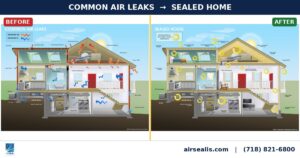
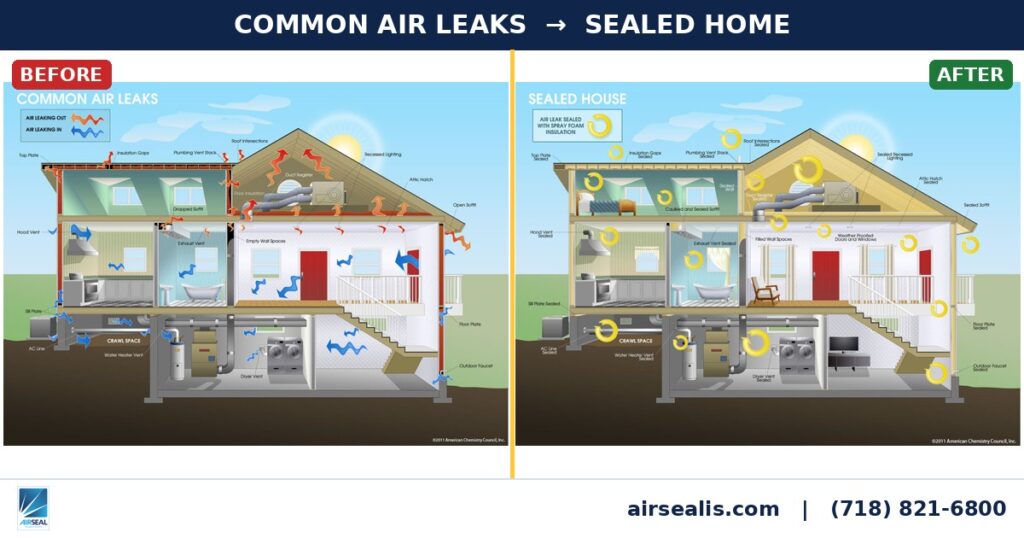
Air leakage is not one big hole. It is dozens of small ones spread across your home’s thermal envelope, and together they add up to the equivalent of leaving a window open all year. Here are the top leak locations, grouped by area:
- The attic (the biggest offender): top plate gaps, the attic hatch, recessed lighting cans, plumbing vent stacks, dropped soffits, gaps in existing insulation, and roof intersections. Because warm air rises, the attic is where most homes lose the most air.
- The walls: empty or under-insulated wall cavities, plus exterior wall penetrations for pipes, wires, and cables.
- The basement and crawl space: the sill plate, the rim joist, the water heater vent, the AC line set, and the dryer vent.
- Everyday openings: exhaust vents, range hood vents, outdoor faucets, open soffits, and duct registers.
Notice how the leaks are concentrated at the top and bottom of the house. Air enters low (basement, crawl space) and escapes high (attic), creating a natural “chimney effect” that pulls conditioned air out and drags dust, allergens, and outdoor air in.
Before vs After: A Leaky House vs a Sealed House
The leaky house
In a typical leaky home, all of those gaps stay open. Conditioned air escapes continuously, so the furnace and AC run longer to keep up. Traditional homes commonly measure around 1.5 to 3.0 air changes per hour (ACH), meaning the entire volume of air inside can turn over several times an hour. That is why one room feels cold while another feels warm, why bills stay high, and why dust seems to reappear the day after you clean.
The sealed house
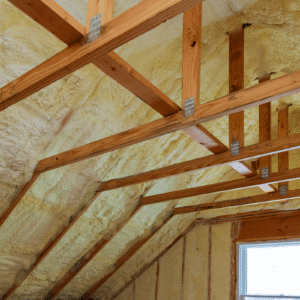
A properly sealed home is different. Spray foam expands to fill and seal gaps, creating a continuous, “monolithic” air barrier across the entire thermal envelope. Instead of chasing dozens of individual leaks one by one, spray foam air sealing closes them all at once. Sealed homes can reach roughly 0.15 to 0.25 ACH, a dramatic reduction in uncontrolled air movement. The house holds the temperature you set, room to room, season to season.
The Benefits of Sealing the Common Air Leaks in a House
When the leaks are sealed, homeowners typically notice the difference quickly:
- No more drafts and cold spots near windows, outlets, and baseboards.
- Even temperatures from room to room and floor to floor.
- Year-round comfort that does not depend on constantly adjusting the thermostat.
- Cleaner indoor air: airtight homes can hold up to 50% less dust and offer better indoor air quality, because outdoor air, pollen, and pollutants have fewer ways in.
- Lower bills: air sealing combined with spray foam can cut heating and cooling energy use by roughly 30% to 50%.
Want to understand the building science behind how spray foam performs? Our guide on spray foam R-value and building science breaks it down in plain English.
Why New York Homes Leak So Much
New York City and New York State have some of the oldest housing stock in the country. Many homes were built long before modern air-sealing standards, using materials and framing methods that leave plenty of room for air to move. Add decades of settling, renovations, and added penetrations for wiring and plumbing, and older NY homes are especially leaky. That is exactly why spray foam air sealing in New York delivers such a noticeable improvement in comfort and efficiency, and it is often the first step to qualifying for available rebates. See our overview of spray foam insulation savings and NY rebates to learn more.
Frequently Asked Questions
What is the most common air leak in a house?
The attic is usually the single biggest source of air loss. Gaps around the top plate, recessed lights, plumbing vent stacks, and the attic hatch let warm air escape upward all winter. Because warm air rises, sealing the attic often makes the most immediate difference in comfort and energy use.
What is the best drafty house fix?
Caulk and weatherstripping help with obvious gaps around windows and doors, but they only address a small fraction of the leaks. The most effective drafty house fix is air sealing the whole envelope, especially air sealing the attic, walls, and rim joist. Spray foam does this in one continuous application, sealing the many hidden leaks caulk can never reach.
How do I know if my house is losing air?
Common signs include drafts near outlets and baseboards, rooms that never reach the set temperature, high heating and cooling bills, and dust that returns quickly after cleaning. A professional assessment can pinpoint exactly where your house loses air and measure your home’s air-tightness so you know what to seal first.
Find Out Where Your Home Is Losing Air
AirSeal Insulation Systems helps homeowners across New York City and New York State seal the common air leaks in a house and turn drafty rooms into a comfortable, sealed home. Schedule your free assessment and quote today.
Or call (718) 821-6800.